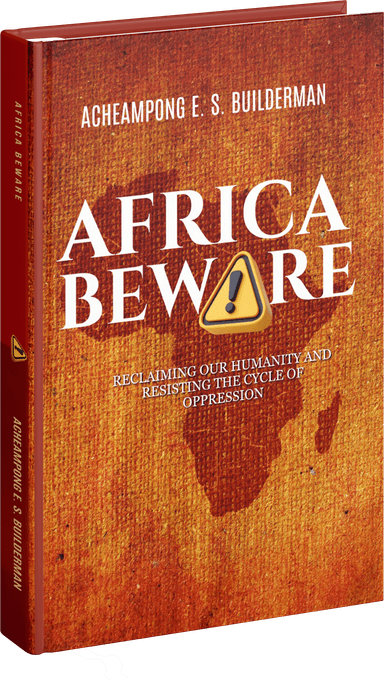
It began, as the most honest books often do, with a child's homework. In Africa Beware: The Chains, the Choice, and the Christ Who Sets a Continent Free, Reverend Acheampong E. S. Builderman recounts an evening when his daughter brought her African History assignment to the table and asked ten questions he could not answer that night. Where do we truly belong? Where was God when the chains were fastened? Why do our people pray so much and still remain so poor? This book is the answer he owed her, and it took years to write.
What makes this book unusual, and at times startling, is its refusal to settle into either of the two comfortable stories readers might expect. It will not let the coloniser off the hook, and it devotes some of its most powerful chapters to naming the transatlantic trade for exactly what Scripture calls it, theft, on an industrial and ledgered scale. But it also refuses to let African leadership off the hook. Builderman's central and most provocative claim is stark. Africa is not a poor continent. It is a plundered one. And the plunder, he argues, did not end with independence. It changed hands.
The book's method is its strength. Each chapter takes one of his daughters' questions and follows it wherever the evidence and the Scripture lead, through the dungeons of Elmina, through the Mercator map that quietly taught a generation of children their continent was smaller than it is, through the comparison of Ghana and Singapore, two nations that started independence on opposite economic footing and arrived at opposite destinations because of leadership rather than resources. He introduces a simple, recurring frame, the steward and the thief, and applies it without favouritism to slave traders, colonial administrators, corrupt religious ministers or government officials, illegal miners, and silent pastors alike.
The theology here is not decorative. Reverend Builderman writes as a pastor first, and his answer to where God was during the trade, delivered through his own testimony of standing in the dungeon beneath a chapel at Elmina Castle, is one of the most moving passages in the book. God was not in the chapel above the chains, he argues. He was in the dungeon, and later, on a cross, He took the dungeon into Himself.
The book closes not with despair but with a charter and a challenge, calling a rising generation to choose stewardship over theft, in whatever office, however small, they hold. It ends the way it begins, at a father's table, handing the questions and the choice back to his daughters, and to every reader who has ever wondered whether history's verdict on a continent is final. Builderman's answer is that it is not.